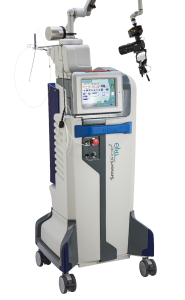
SmartXide² TRIO
Innovation for minimally invasive micro-surgery in: Head & Neck, Women’s Health, Neurosurgery, Dermatology, Plastic and General Surgery
SmartXide² TRIO
Unique, TRIO
Designed to enhance surgeon capabilities Smartxide² TRIO is the new era of laser surgical innovation. Precision, reproducibility and safety are the main plus of the intuitive Smartxide²TRIO which delivers the CO₂ laser beam through both the articulated arm and high-performance CO₂ hollow fibers, and can host the adjunct of the High Power Diode laser module with dedicated fibers.
Smartxide² TRIO Quick Wins:

Surgical innovation of the Three-in-One technology for maximum versatility in all surgical environments, especially in the OR of hospitals and clinics.

New Sealed RF excited CO2 laser source providing Pulsed Shape Design technology (PSD®), to select pulses for various clinical indications.

CO2 Laser flexible hollow fiber for delicate and smart tissue management, to achieve maximum thermal control and surgical precision.

Additional High Power Diode Laser module, that means a second wavelength, to complete the clinical indications.

Highly accuracy microspot micromanipulators with surgical scanners, and complete sets of surgical handpieces, for each specialty enables surgeons to operate with precision and reproducibility of any surgical treatment.

Clinically validated and approved also for both “ONE SHOT Stapedotomy” performed with both with CO2 laser and High power Diode laser module, and “MonaLisa Touch” for GSM patients.
RF Excited CO₂ Laser Source and PSD® Technology
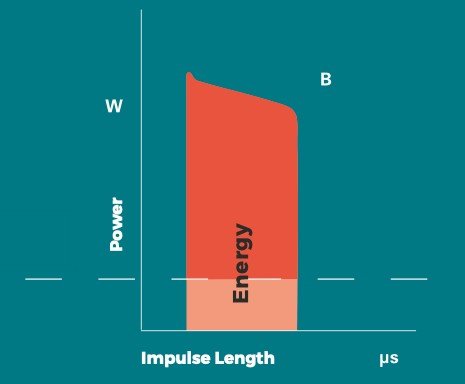
The SmartXide2 TRIO RF-excited CO2 Laser source offers high power and speed of action. The newest PSD® (Pulse Shape Design) technology, utilizing both of these features, is able to generate variable peak pulses with different structure, duration and power to adapt to the various clinical conditions. This makes the SmartXide2 TRIO CO2 laser systems extremely versatile for the various surgical applications, especially for ENT surgery. U-PULSE (“Ultrapulsed” – Fig. B) and “Real CW” pulses are the most commonly used in this kind of surgery.


GYNECOLOGY
SmartXide2 TRIO is the elective CO2 & Diode laser for minimally invasive Gynecological surgery, Colposcopy and Laparoscopy. It provides repeatable and predictable results and it connects to advanced scanning systems for laparoscopy and scanners and microspot micromaniplulators for colposcopy. Delicate to healthy tissues and critical organs, it is instead highly effective and precise for incision, excision, ablation, vaporization on the targeted soft tissue. Therefore SmartXide2 TRIO is the gold standard for gynecology surgeons for a wide range of clinical indications.
ENT
SmartXide2 TRIO is the elective laser for minimally invasive surgery for ENT, especially for TLM – Transoral laser microsurgery for pharynx, for SCC – Squamous cell carcinomas and for Diode & CO2 “ONE SHOT” Stapedotomy technique. It provides repeatable and predictable outcomes and it connects with advanced scanning systems, microspot micromaniplulators and microscope, to simplify the surgical procedures. The “Depth” and “Power” operative modes make it very versatile & intuitive to use and due to the thermal control and smart soft tissue management it is highly delicate to healthy tissues and highly effective to the target tissue.